
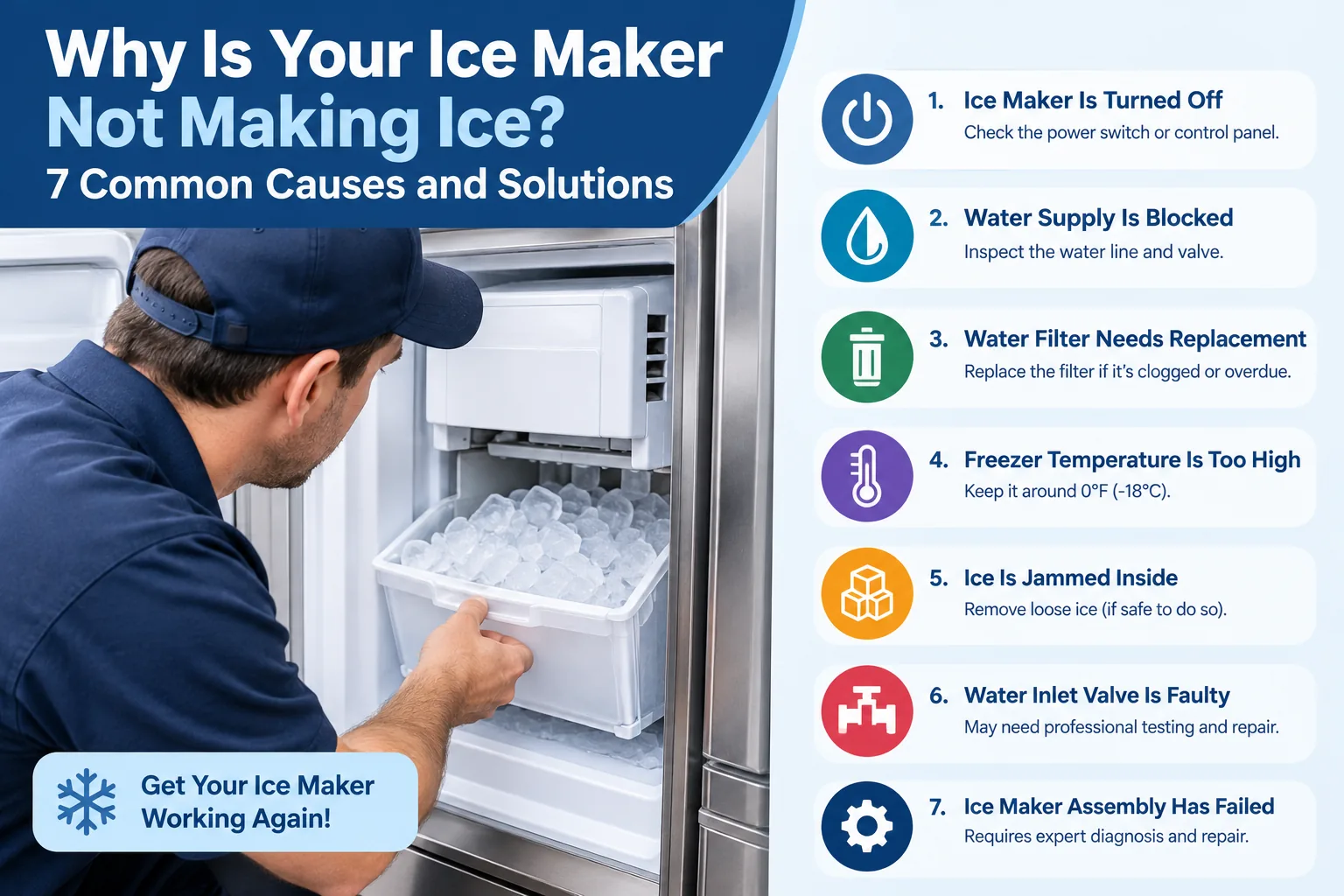
An ice maker is a convenient feature in many modern refrigerators, especially during hot weather or when hosting guests. However, when your ice maker suddenly stops producing ice, it can become frustrating. The good news is that several common ice maker problems can be identified with a few basic checks.
For homeowners looking for ice maker repair Woodbridge, understanding the possible causes can help determine whether a simple adjustment may solve the issue or professional assistance is needed.
1. The Ice Maker Is Turned Off
One of the simplest reasons an ice maker stops producing ice is that it has been accidentally switched off. Some refrigerators have a dedicated power switch, while others use a control panel or a wire shutoff arm.
Possible solution:
- Check whether the ice maker is switched on.
- Make sure the shutoff arm is in the correct position.
- Review your refrigerator’s manual for model-specific instructions.
- Check for an error message on the control panel.
If the unit is switched on but still does not produce ice, another issue may be responsible.
2. The Water Supply Is Blocked
An ice maker needs a steady supply of water to produce ice cubes. If the water line is blocked, disconnected, or kinked, the ice maker may stop working completely.
Common signs include:
- No new ice cubes are forming.
- Ice cubes are unusually small.
- The water dispenser is also not working properly.
- The refrigerator is making unusual filling noises.
Check whether the refrigerator’s water supply valve is open and inspect any accessible tubing for visible kinks. Avoid disconnecting pressurized water lines if you are unsure how to handle them safely.
3. The Water Filter Needs Replacement
A clogged or overdue water filter can restrict the water flow needed for ice production. This may lead to slow ice production, smaller cubes, or no ice at all.
What you can do:
- Check the filter replacement indicator.
- Review the manufacturer’s recommended replacement schedule.
- Install a compatible replacement filter if needed.
- Follow the refrigerator’s instructions for resetting the filter indicator.
If replacing the filter does not improve ice production, the issue may be related to the water inlet valve or another internal component.
4. The Freezer Temperature Is Too High
Ice makers need a sufficiently cold freezer environment to freeze water properly. If the freezer temperature rises too high, ice production may slow down or stop.
Possible causes include frequent door opening, overloading the freezer, blocked air vents, or a refrigerator cooling problem.
Try these steps:
- Check the freezer temperature setting.
- Keep the temperature near 0°F (-18°C), following your manufacturer’s recommendations.
- Avoid blocking internal air vents with food containers.
- Make sure the freezer door closes completely.
If the freezer is not maintaining the correct temperature, the problem may require professional diagnosis.
5. Ice Is Jammed Inside the Ice Maker
Sometimes, ice cubes become stuck in the mold, storage bin, or dispensing mechanism. This can prevent the ice maker from completing its normal production cycle.
Possible signs:
- The ice maker has stopped producing new cubes.
- The dispenser makes noise but releases no ice.
- Ice cubes appear stuck together.
- The mechanism seems unable to move normally.
Remove loose ice from the accessible storage bin if the owner’s manual permits it. Never force moving parts or use sharp objects to break up ice inside the mechanism. If the jam is inside the assembly, professional service may be necessary.
6. The Water Inlet Valve Is Faulty
The water inlet valve controls the flow of water into the ice maker. If the valve becomes defective, it may fail to deliver enough water or stop supplying water altogether.
Unlike a simple setting issue, a faulty valve may require component testing and replacement.
Signs of a possible valve problem include:
- No water entering the ice maker despite an adequate supply.
- Ice production stopping unexpectedly.
- Very small or incomplete ice cubes.
- Water filling problems that continue after the filter is checked.
Because this component involves both water and electrical connections, it is best to have a qualified technician inspect it rather than attempting an unfamiliar repair.
7. The Ice Maker Assembly Has Failed
If the water supply, filter, freezer temperature, and basic settings are all correct, the ice maker assembly itself may have developed a fault.
Depending on the refrigerator model, the problem could involve the motor, thermostat, sensor, wiring, or electronic control system.
A technician can inspect the assembly, identify the defective component, and determine whether repair or replacement is the more practical option.
For persistent problems, professional ice maker repair Woodbridge can help restore normal ice production without unnecessary replacement of the entire refrigerator.
When Should You Call a Professional?
Basic troubleshooting can resolve some ice maker issues, but repeated failures may indicate a deeper mechanical, electrical, or water supply problem.
Consider contacting an appliance repair professional if:
- The ice maker remains inactive after basic checks.
- The freezer cannot maintain the correct temperature.
- Water is leaking around the refrigerator.
- You hear unusual grinding or repeated clicking noises.
- The water inlet valve or internal assembly may be defective.
If you notice water near electrical components, disconnect power only if it is safe to do so, shut off the water supply if accessible, and arrange professional service.
How to Prevent Future Ice Maker Problems
Regular maintenance can help your ice maker operate more reliably and reduce avoidable interruptions.
- Replace the water filter according to the manufacturer’s schedule.
- Keep the freezer at the recommended temperature.
- Clean the ice storage bin as directed in the owner’s manual.
- Check accessible water tubing for visible kinks or damage.
- Avoid overfilling the freezer or blocking air vents.
- Address leaks and unusual noises promptly.
Following these simple habits can help maintain consistent ice production and may prevent minor problems from becoming more expensive repairs.
Final Thoughts
An ice maker that stops producing ice does not always have a serious fault. A switched-off unit, restricted water supply, clogged filter, or incorrect freezer temperature may be responsible. Checking these basic issues first can help you understand what is happening.
If the problem continues, a professional can diagnose the cause and recommend an appropriate solution. Homeowners searching for ice maker repair Woodbridge should consider professional assistance when the issue involves internal components, electrical connections, persistent leaks, or repeated failures.